
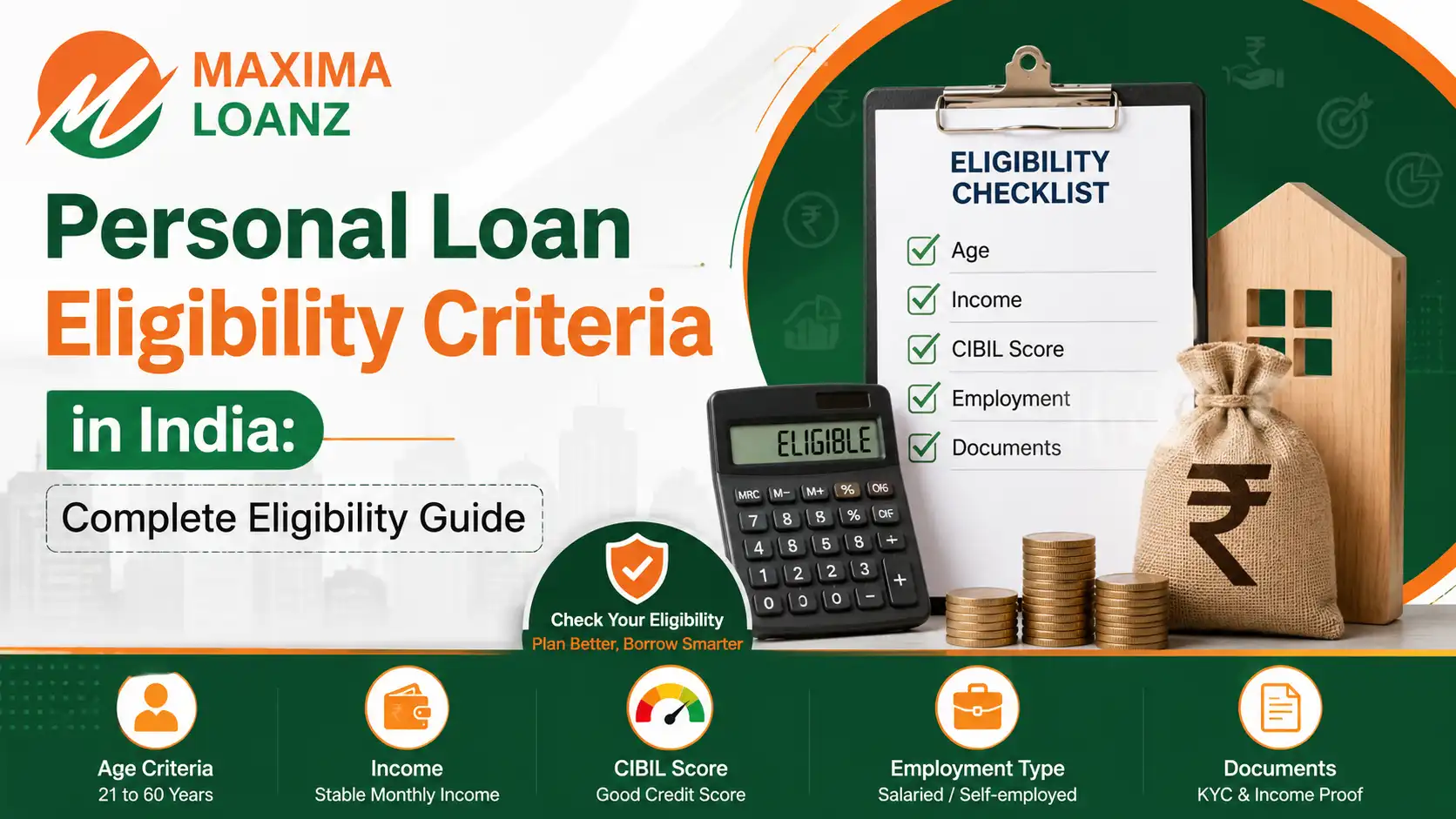
A personal loan can be an excellent way to manage unexpected expenses, fund an event or higher education, upgrade your home, or consolidate existing debts. Since personal loans are unsecured, banks and NBFCs assess your financial standing before approving your application.
Understanding the Personal Loan Eligibility Criteria in India significantly increases your chances of approval. Lenders consider various factors, such as your age, monthly income, employment type, credit score, repayment history, and any existing financial liabilities.
This comprehensive guide explains who is eligible for a personal loan, how eligibility is determined, and the required documentation. It also offers practical tips to improve your chances of loan approval.
What is Personal Loan Eligibility?
Personal loan eligibility criteria are a set of requirements that determine whether an applicant qualifies for a personal loan. While each institution has its own rules, the essential eligibility conditions remain similar across most banks and financial institutions.
Your eligibility depends on factors such as:
- Age
- Monthly income
- Employment status
- CIBIL score
- Existing EMIs
- Work experience
- City of residence
- Employer profile
Meeting these requirements increases the likelihood of obtaining faster approval and better interest rates.
Personal Loan Eligibility Criteria in India
The table below summarizes the common Personal Loan Eligibility Criteria adopted by most lenders.
| Eligibility Factor | Typical Requirement |
| Age | 21–60 years |
| Nationality | Indian Resident (NRIs eligible with selected lenders) |
| Employment | Salaried or Self-employed |
| Minimum Monthly Income | ₹20,000–₹30,000 (varies by lender) |
| Work Experience | Minimum 1–2 years |
| Current Job Experience | At least 6 months |
| CIBIL Score | 750 or above preferred |
| Existing Debt | Healthy debt-to-income ratio |
| Bank Account | Active salary/business account |
Qualification for Personal Loan
Personal Loan Eligibility Criteria depends on your repayment capacity rather than on an asset pledged as collateral, as personal loans are granted without any guarantee or security.
Generally, applicants should have:
- Stable monthly income
- Good employment history
- Positive repayment track record
- Healthy CIBIL score
- Low existing financial obligations
- Valid KYC documents
Applicants who meet these criteria are generally eligible for better loan amounts and lower interest rates.
Personal Loan Eligibility Age in India
Age is one of the first criteria lenders verify.
| Applicant Type | Preferred Age |
| Salaried | 21–60 Years |
| Self-employed | 25–65 Years |
Young professionals with stable incomes often secure approval easily, whereas applicants nearing retirement may have less time to repay the loan.
Minimum Salary Required for Personal Loan
Your monthly income determines your repayment ability.
| City Category | Minimum Salary |
| Metro Cities | ₹25,000–₹30,000 |
| Tier-2 Cities | ₹20,000–₹25,000 |
| Tier-3 Cities | ₹15,000–₹20,000 (Selected lenders) |
Generally, a higher income improves both loan eligibility and the maximum loan amount.
Personal Loan Eligibility for ₹20,000 Salary
Many borrowers wonder whether they can get a Personal Loan Eligibility Criteria with a monthly salary of ₹20,000.
The answer is yes, provided you:
- Have a good loan repayment record
- Have a CIBIL score above 700
- Have low existing EMI obligations
- Be employed by a reputed company
- Meet the lender’s minimum salary requirement
The approved loan amount depends not only on your salary but also on your overall financial profile.
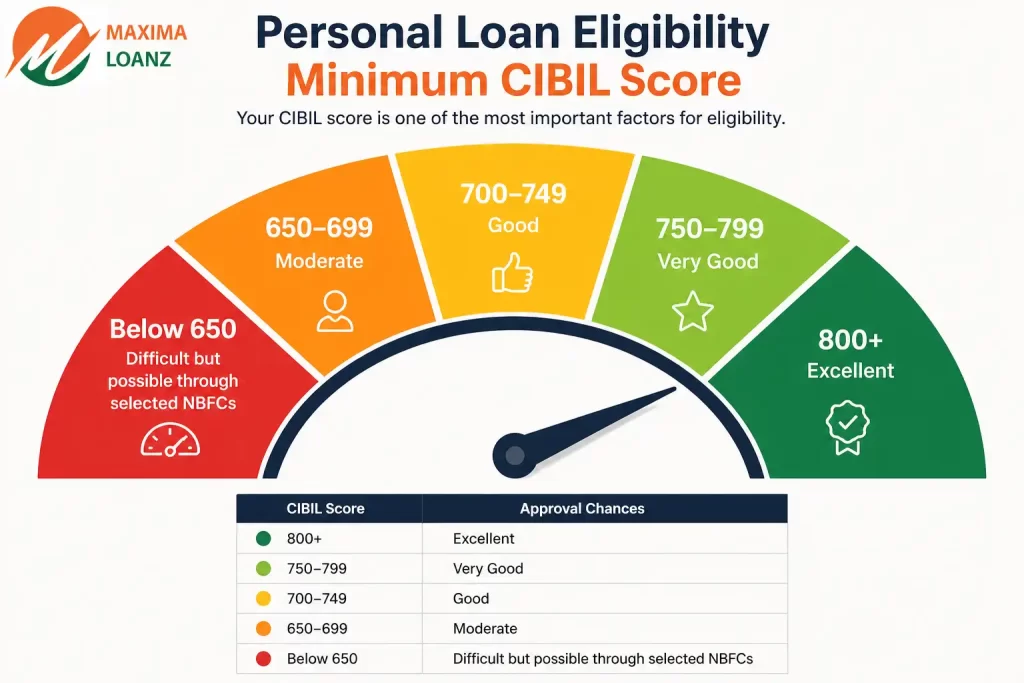
Personal Loan Eligibility Minimum CIBIL Score
Your CIBIL score is one of the most important factors for eligibility.
| CIBIL Score | Approval Chances |
| 800+ | Excellent |
| 750–799 | Very Good |
| 700–749 | Good |
| 650–699 | Moderate |
| Below 650 | Difficult but possible through selected NBFCs |
Making EMI and credit card payments on time improves your credit score over time.
How Personal Loan Eligibility is Calculated
Many applicants ask, how personal loan eligibility is calculated?
Lenders typically consider:
- Monthly income
- Existing EMIs
- Fixed monthly expenses
- Credit score
- Employment stability
- Loan tenure
- Interest rate
- Age
A commonly used metric is the Fixed Obligation to Income Ratio (FOIR). Most lenders prefer your total EMI obligations to fall within the range of 40% to 55% of your monthly income.
Example
| Monthly Income | ₹60,000 |
| Existing EMI | ₹10,000 |
| Maximum EMI Allowed | ₹30,000 |
| Eligible EMI Capacity | ₹20,000 |
Based on this repayment capacity, the lender determines the maximum loan amount you are eligible for.
How Much Personal Loan Can I Get in India?
The loan amount depends on your income and repayment capacity.
| Monthly Income | Approximate Loan Eligibility |
| ₹20,000 | ₹1–3 Lakh |
| ₹30,000 | ₹2–5 Lakh |
| ₹50,000 | ₹5–10 Lakh |
| ₹75,000+ | ₹10–25 Lakh |
Actual eligibility varies depending on the lender’s policy.
Maximum Personal Loan Amount in India
Most banks and NBFCs offer personal loans ranging from ₹50,000 to ₹50 lakh.
The sanctioned amount depends on:
- Monthly salary
- Credit history
- Existing liabilities
- Employer category
- Loan tenure
- Income stability
Applicants with excellent financial profiles generally receive higher loan limits.
Eligibility to Get Personal Loan
To qualify for a personal loan, ensure that you:
- Are at least 21 years old
- Earn a stable monthly income
- Maintain a good CIBIL score
- Are regularly employed or engaged in work
- Keep existing EMIs under control
- Submit all required documents
Adhering to these points increases your chances of loan approval.
Documents Required for Personal Loan
| Document Type | Examples |
| Identity Proof | Aadhaar Card, PAN Card, Passport |
| Address Proof | Aadhaar, Passport, Utility Bill |
| Income Proof | Salary Slips, Bank Statements |
| Employment Proof | Employee ID, Offer Letter |
| Photographs | Passport-size Photos |
| PAN Card | Mandatory for most lenders |
Some lenders may ask for additional documents based on the loan amount.
Read More: What Is a Personal Loan
Personal Loans in India for NRIs
Many banks offer personal loans to Non-Resident Indians (NRIs).
Generally, the requirements include:
- A valid Indian passport
- An NRE or NRO account
- Stable employment abroad
- Regular income
- A good credit profile
- An Indian co-applicant (in some cases)
Loan eligibility for NRIs depends on the lender’s internal policies.
Best Personal Loan in India for NRIs
Compare the following when choosing a lender:
- Interest rates
- Processing fees
- Loan tenure
- Prepayment charges
- Customer support
- Digital application process
Choosing the right lender can help reduce the total cost of the loan.
Read More: How Bank Loans Work
Factors Affecting Personal Loan Eligibility
Several factors influence loan approval.
| Factor | Impact |
| Age | High |
| Salary | Very High |
| Employment Stability | High |
| CIBIL Score | Very High |
| Existing Loans | High |
| Employer Reputation | Medium |
| Residence Stability | Medium |
| Bank Relationship | Medium |
Tips to Improve Personal Loan Eligibility Criteria
Increase your chances of approval by following these steps:
- Maintain a CIBIL score above 750.
- Pay EMIs and credit card bills on time.
- Avoid applying for multiple loans simultaneously.
- Reduce existing debt before applying.
- Increase your monthly income.
- Choose the right loan tenure.
- Apply only for the amount you actually need.
- Keep all necessary documents ready.
Common Reasons for Personal Loan Rejection
Loan applications can be rejected for the following reasons:
- Low credit score
- Low income
- Frequent job changes
- High debt relative to income (debt-to-income ratio)
- Incorrect information
- Lack of necessary documents
- Recent multiple loan inquiries
By avoiding these mistakes, you can increase your chances of loan approval.
Benefits of Meeting Personal Loan Eligibility Criteria
Applicants who meet the necessary Personal Loan Eligibility Criteria often enjoy these benefits:
- Quick loan approval
- Lower interest rates
- Higher loan amounts
- Convenient repayment tenure
- Fast online processing
- Minimal paperwork
- Better bargaining power